On this page
People search for crypto-friendly banks in Ghana hoping for a list. There isn’t one. No Ghanaian bank advertises crypto services, and none of the big names has published a policy we could find. What exists instead is a series of Bank of Ghana notices, two well-reported incidents from 2023, and a lot of customer experience that varies from branch to branch.
This page sets out what the BoG has told banks, what we know about each major bank, and how to buy crypto with a card or receive P2P payments without getting your account flagged.
Where things stand
Crypto is legal to hold and trade in Ghana under the Virtual Asset Service Providers Act, 2025 (Act 1154), but no licences had been issued under it by November 2026. Banks sit under the Bank of Ghana, which has repeatedly told them to keep their distance from crypto platforms.
So banks tend to do the minimum: they do not offer crypto products, some decline card payments to exchanges, and they watch accounts that receive many transfers from strangers. None of the five banks in this guide has said publicly that it blocks or allows crypto.
What the Bank of Ghana has told banks
-
22 Jan 2018
BoG notice on digital currencies
Crypto not regulated under any law in Ghana and not legal tender.
-
2022
Banks and payment firms told not to facilitate crypto
Until guidelines exist; exact notice number unconfirmed.
-
Jan 2023
FNB and GTBank act on crypto card use
Card block at FNB; FX-difference debits at GTBank.
-
Dec 2025
VASP Act passed and signed
Crypto brought under a legal framework.
-
Jun 2026
Directive on platform-run dollar wallets
Banks, MoMo issuers and payment firms must stop facilitating them.
The June 2026 directive is the one that matters most today. Banks, specialised deposit-taking institutions, electronic money issuers (including MoMo) and payment service providers were told to “immediately discontinue” arrangements that fund, operate or settle unauthorised fiat wallets, mainly in US dollars, that crypto platforms offered to people in Ghana. It cited the Payment Systems and Services Act, 2019 (Act 987) and the Foreign Exchange Act, 2006 (Act 723), named no platforms and gave no grace period.
It was reported as not a ban on crypto trading or crypto-to-crypto activity. Our regulation guide covers the wider law and what is still pending.
Bank by bank: what customers report
We searched for public statements, press releases and dated news reports for each bank. None of the five has said anything public about crypto, and the table shows the little we could confirm.
| Bank | Public crypto statement | What we can confirm |
|---|---|---|
| GCB Bank | None found | Listed as a transfer option by local broker Mybitstore |
| Ecobank Ghana | None found | Listed by Mybitstore; named in third-party P2P filter lists |
| Stanbic Bank Ghana | None found | Named in third-party Binance P2P filter lists |
| Fidelity Bank Ghana | None found | Nothing specific confirmed |
| Absa Bank Ghana | None found | Named in third-party Binance P2P filter lists |
Appearing in a P2P filter list means traders accept transfers from that bank. It does not mean the bank approves. We did not find customer reports for these banks that we could verify and date, so we will not repeat forum claims about which bank “allows” crypto.
Two other banks did act publicly. On 23 January 2023, First National Bank Ghana reversed debits linked to Binance.com card transactions and said its cards “will not be enabled for crypto exchange and related transactions”. The same month, GTBank Ghana debited customers who had traded crypto for the difference between “unapproved” platform exchange rates and standard rates, saying crypto was not approved legal tender in Ghana.
Neither incident was a regulator’s rule, but both show what a bank can do on its own: block a merchant category, claw back money, or rewrite the exchange rate it applies. The customers involved learned this after the fact. If you plan to move meaningful sums, assume your bank can act the same way and keep your records ready.
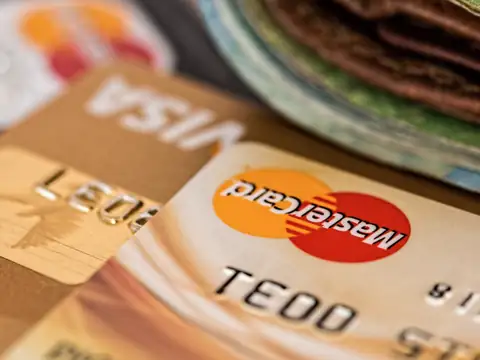
Buying crypto with a Ghanaian Visa or Mastercard
Card buying works on some exchanges. CEX.IO accepts Visa and Mastercard from Ghana: Ghana is not on its list of countries where card deposits are unavailable. Card deposits cost 0.49% to 4.99% plus a service charge, and new accounts are capped at $1,000 a day and $3,000 a month for three months. CEX.IO has no cedi wallet and no MoMo.
Your bank decides whether the payment clears. Before trying, confirm that your card is enabled for international online transactions, that your limits cover the amount, and that the name on the exchange matches the card. If it fails, the exchange usually shows a generic decline; only your bank can tell you why.
Dollar cards and FX limits
Card purchases on foreign exchanges are charged in dollars, euros or pounds, so your bank converts from cedis at its own rate and may add a fee. Ask your bank for both numbers; together they can cost more than the exchange’s fee.
Some customers hold dollar accounts with linked cards, which avoids the conversion. We could not confirm current per-bank limits on foreign-currency card spending from public sources, so ask your bank what applies to your account. Remember that the June 2026 directive cited the Foreign Exchange Act, which signals that the BoG is watching dollar flows linked to crypto.
Receiving P2P payments into a bank account
Many P2P buyers pay by bank transfer, and third-party reviews list GCB, Ecobank, Stanbic and Absa among Binance’s P2P payment filters. A transfer from another person is not the platform-run dollar wallet the June directive describes, though no official text we found addresses P2P transfers either way.
Banks still apply AML monitoring (anti-money-laundering checks under Act 1044). Many incoming transfers from strangers, round sums at odd hours and quick onward payments can all trigger questions. Receive only from buyers whose names match their verified platform profile, and keep each order’s record next to the bank entry.
If your bank flags or freezes your account
Stay calm and answer in writing. Explain the source of the funds and attach your evidence: exchange statements, P2P order numbers, the buyer’s verified name and your own purchase records. Do not deny crypto activity if the bank already has the transaction trail; a consistent, documented answer is your strongest position.
If the bank closes the relationship, you cannot force it to keep you. Move your P2P receiving to a MoMo wallet in your name, and keep amounts within your wallet tier limits. Our guide to selling crypto in Ghana covers MoMo cash-outs.
Practical setup
A setup that tends to cause fewer problems
- One bank card enabled for international online payments, used only for exchange purchases
- Exchange, bank and MoMo accounts all in the same name as your Ghana Card
- P2P payments received only from verified buyers in their own names
- A simple record of each purchase and sale with order numbers
- Two-factor authentication from an app, not SMS, on every exchange
Use KYC details that match your Ghana Card everywhere, since the Ghana Card is the sole ID for financial transactions. Keep crypto activity separate from your salary account if you can. And if a bank tells you no, believe it and use another route rather than hiding the purpose of the payment.
Frequently asked questions
Which banks in Ghana allow crypto?
Did the Bank of Ghana ban banks from crypto?
Can I buy crypto with a Ghanaian debit card?
Why was my card declined on a crypto exchange?
Can I receive P2P payments into my bank account?
Is MoMo better than a bank account for crypto payments?
Sources we checked
- ↗MyJoyOnline — First National Bank reinstates accounts after Binance card debits
- ↗MyJoyOnline — GTBank debits crypto traders for FX differences
- ↗GNA — BoG orders banks to cut ties with crypto-linked USD wallets
- ↗Graphic Online — BoG orders financial institutions to cut ties over fiat wallet operations
- ↗Digital Policy Alert — BoG Notice BG/GOV/SEC/2018/02
- ↗GhanaWeb — BoG stands by directive to licensed institutions
- ↗CEX.IO — Limits and commissions (card country lists)
- ↗Datawallet — Best crypto exchanges in Ghana (Binance P2P bank filters)
Risk note: crypto prices can fall sharply and you can lose all the money you put in. This page is general information, not financial, legal or tax advice. Fees, limits and rules change; check them with the provider, the Bank of Ghana and the SEC before you act.