On this page
Learning how to invest in cryptocurrency in Ghana is mostly about learning what not to do. The buying part takes ten minutes. The hard part is staying calm when bitcoin drops 10% in a week, ignoring the WhatsApp group that promises 3% a day, and not putting school fees into a coin a stranger recommended.
This plan is deliberately boring. It will not make you rich next month. It is designed so that a mistake costs you a lesson, not your savings.
How to invest in crypto in Ghana: before you put in a pesewa
Crypto should sit on top of a stable base, not replace it. Before your first purchase, check three things.
First, an emergency fund. Keep a few months of essential expenses in cedis, in a savings account or short-term T-bills, where you can reach it without selling anything at a bad price. Second, no expensive debt. Paying off a loan charging high interest beats almost any investment. Third, a clear reason. “I want a small long-term bet on bitcoin” is a reason. “My cousin doubled his money” is not.
Open and verify one account
One account is enough to start. Opening five spreads your attention and multiplies the passwords and codes you have to protect.
Pick a platform that accepts users in Ghana and lets you pay in a way that works for you: a Visa or Mastercard on an international exchange, or MoMo through a P2P desk. Verification, called KYC, usually means a photo of your Ghana Card or passport and a live selfie.
As soon as the account is open, switch on 2FA using an authenticator app, not SMS. Use a password you do not use anywhere else. Write down which email and phone number the account is linked to.
Card users should know that some Ghanaian banks decline payments to crypto platforms. New CEX.IO accounts, for example, are capped at US$1,000 a day and US$3,000 a month by card for the first three months, which is plenty for a cautious start.
A small first purchase
Your first purchase is tuition. Buy GH¢100 or GH¢200 worth of bitcoin or USDT and watch every step.
Note the price you saw, the price you paid and the fee. The gap between them is the spread plus fees, and it tells you how expensive your route is. On our dated snapshot from 20 November 2026, GH¢200 bought about 17 USDT or about 27,400 satoshis of bitcoin at the mid-market price, before fees.
Then practise a withdrawal. Send a small amount to a wallet you control and back. If you can do that calmly, you understand more than most people who bought in a hurry.
Which coin first
Most Ghanaians start with one of two. Bitcoin is the long-term bet with the longest track record and wild price swings. USDT is a stablecoin that tracks the dollar; it is a way to hold dollars, not an investment that grows. Smaller coins can move faster in both directions and are better left until you understand the first two.
Regular buying with DCA
Nobody can predict the best day to buy. DCA, short for dollar-cost averaging, removes the guessing. You choose a fixed cedi amount and a fixed day, then buy whatever the price.
Say you buy GH¢200 of bitcoin on the first of each month. In a month when bitcoin is cheap, your GH¢200 buys more satoshis. When it is expensive, it buys fewer. Over a year you invest GH¢2,400 and end up with an average price, without ever staring at charts at midnight.
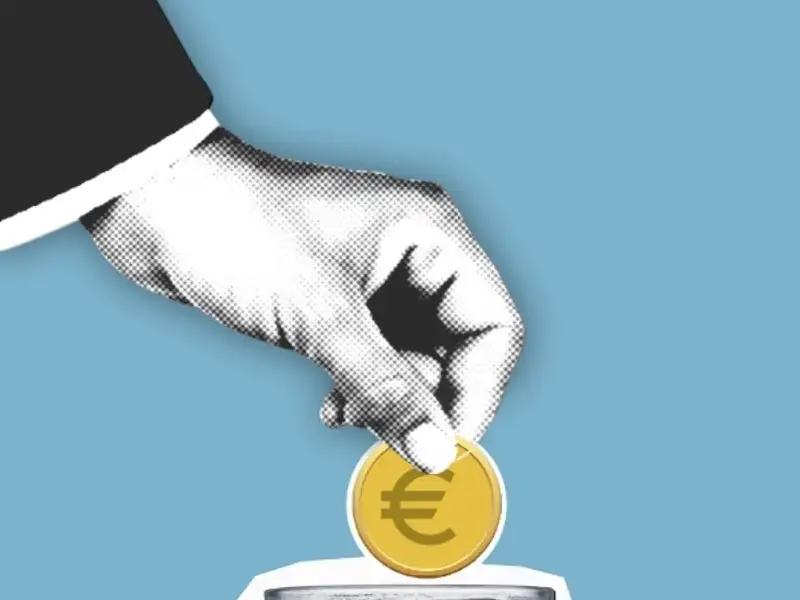
DCA does not guarantee a profit. If bitcoin falls for two years, you will hold less value than you paid. What it does is stop you from putting everything in at the top because of excitement, or selling everything at the bottom because of fear.
Pick an amount you could keep paying even in a tight month. GH¢50 kept up for a year teaches more discipline than GH¢1,000 stopped after two months.
How much is too much
The size of your crypto position matters more than which coin you buy. A useful test: imagine the balance halves overnight. If that would make you skip rent, delay school fees or borrow from family, it is too much.
Many cautious investors keep crypto to a small slice of their total savings, often in single digits as a percentage. You do not have to follow anyone’s number, but write yours down before you start, so a good week does not talk you into doubling it.
Never invest with borrowed money, whether that is a loan, a credit card or the “10x” button on an exchange. A 10x position is wiped out by a 10% move against you, and bitcoin can move that much in days.
Crypto next to T-bills and savings
Ghanaians have a familiar alternative: Treasury bills. They pay a known cedi return set at each weekly auction, backed by the Government of Ghana.
| Option | Return in cedis | Main risk |
|---|---|---|
| 91-day T-bill (16 Nov 2026 issue) | About 4.56% a year | Below October inflation of 5.5% |
| 364-day T-bill (same issue) | About 9.46% a year | Money locked for a year |
| Bitcoin | No fixed return | Can fall sharply in days |
| USDT | No return on its own | Tracks the dollar, not the cedi |
On that issue the 91-day bill paid less than inflation, while the 364-day bill paid a few points more. Low short-term rates tempt some savers towards crypto. Be honest with yourself about the trade: a T-bill promises a cedi amount; crypto promises nothing.
USDT protects you against cedi weakness, not against risk in general. In 2025 the cedi gained about 41% against the dollar, so anyone holding USDT that year lost value in cedi terms. By mid-November 2026 the cedi was down 10.6% for the year, which favoured dollar holders. Nobody reliably predicts which way it goes next.
Trading vs investing
Investing means buying something and holding it for years. Trading means buying and selling often to profit from short-term moves. Many beginners who trade lose money to fees, spreads and their own nerves.
Many exchanges promote futures and “copy trading”, and active traders pay far more in fees than people who buy and hold. If you want to try trading, use a tiny amount you have already written off, and keep your long-term holdings in a separate wallet so you cannot gamble them away in a bad mood. Long-term coins are best moved into self-custody, a wallet where you control the keys. Our crypto wallet guide explains the options.
Learning without paying for signals
“Cryptocurrency training in Ghana” is a busy search, and many of the results are sales funnels. A signal group sells you buy and sell calls; a coaching programme sells you a course and then a bigger course. Some end as outright Ponzi schemes. CWPC, a pyramid-style platform, went offline in July 2026 after drawing in thousands of households, and the SEC warned in July 2026 that YEPBIT Exchange and BonChat were unlicensed and suspected fraudulent schemes.
The Bank of Ghana and SEC’s joint notice of 20 February 2026 treats “virtual asset advocacy” as a regulated activity that requires registration. Anyone publicly selling crypto investment coaching should be able to show you that registration, so ask for it.
Free, reliable learning exists. The Bank of Ghana published two National Virtual Assets Education Manuals in April 2026. Near Kumasi, the Bitcoin Technology Center in Ejisu opened in December 2022 to offer free developer training, and Accra has hosted BitDevs meetups at Legon. Our glossary explains the jargon, and our guide to crypto scams in Ghana lists the red flags.
Your first-year checklist
First year with crypto
- Emergency fund in cedis before any purchase
- One verified account with app-based 2FA
- A small first purchase and a test withdrawal
- A fixed monthly amount you can sustain
- A written maximum share of savings for crypto
- Long-term coins moved to a wallet you control, seed phrase on paper
- A simple record of every purchase and sale in cedis, for the GRA
- No paid signals, no borrowed money, no guaranteed-return schemes
The GRA has said existing tax law already covers crypto gains, though it has not published crypto-specific rates. A spreadsheet with the date, amount in cedis and coin for each trade is enough to start.
At the end of the year, review calmly. Did you stick to the plan? Is crypto still a small share of your savings? If the answer to both is yes, you have done better than most.
Frequently asked questions
How do I start investing in crypto in Ghana?
How much money do I need?
Is crypto better than treasury bills?
Should I pay for crypto training?
What is DCA?
Do I pay tax on crypto profits in Ghana?
Sources we checked
- ↗YEN.com.gh — GH¢5,000 in Treasury bills: returns based on Bank of Ghana rates (16 Nov 2026 issue)
- ↗Bank of Ghana — Summary of Economic and Financial Data, November 2026
- ↗Citi Newsroom — Inflation rises for third consecutive month to 5.5%
- ↗SEC Ghana — Warning against YEPBIT Exchange and BonChat
- ↗Bank of Ghana — Virtual assets (education manuals)
- ↗Bank of Ghana — Joint notice on unauthorised advertising of virtual asset products (20 Feb 2026)
- ↗MyJoyOnline — GRA to deploy technology to track crypto accounts
- ↗Dubawa Ghana — How the CWPC Ponzi promised easy money and collapsed
Risk note: crypto prices can fall sharply and you can lose all the money you put in. This page is general information, not financial, legal or tax advice. Fees, limits and rules change; check them with the provider, the Bank of Ghana and the SEC before you act.