On this page
Kumasi had a crypto meetup before most Ghanaians had heard the word. In March 2015, about 50 people gathered in the city for Coinfest Africa, organised by Philip Agyei Asare’s Dream Bitcoin Foundation, according to Cointelegraph. Seven years later a Bitcoin school opened in Ejisu, on the city’s eastern edge.
If you want to buy crypto in Kumasi today, that history matters less than three practical things: how much your MoMo wallet can move in a day, how to trade safely with strangers, and how to spot the next “investment” before your money disappears into it.
Kumasi at a glance
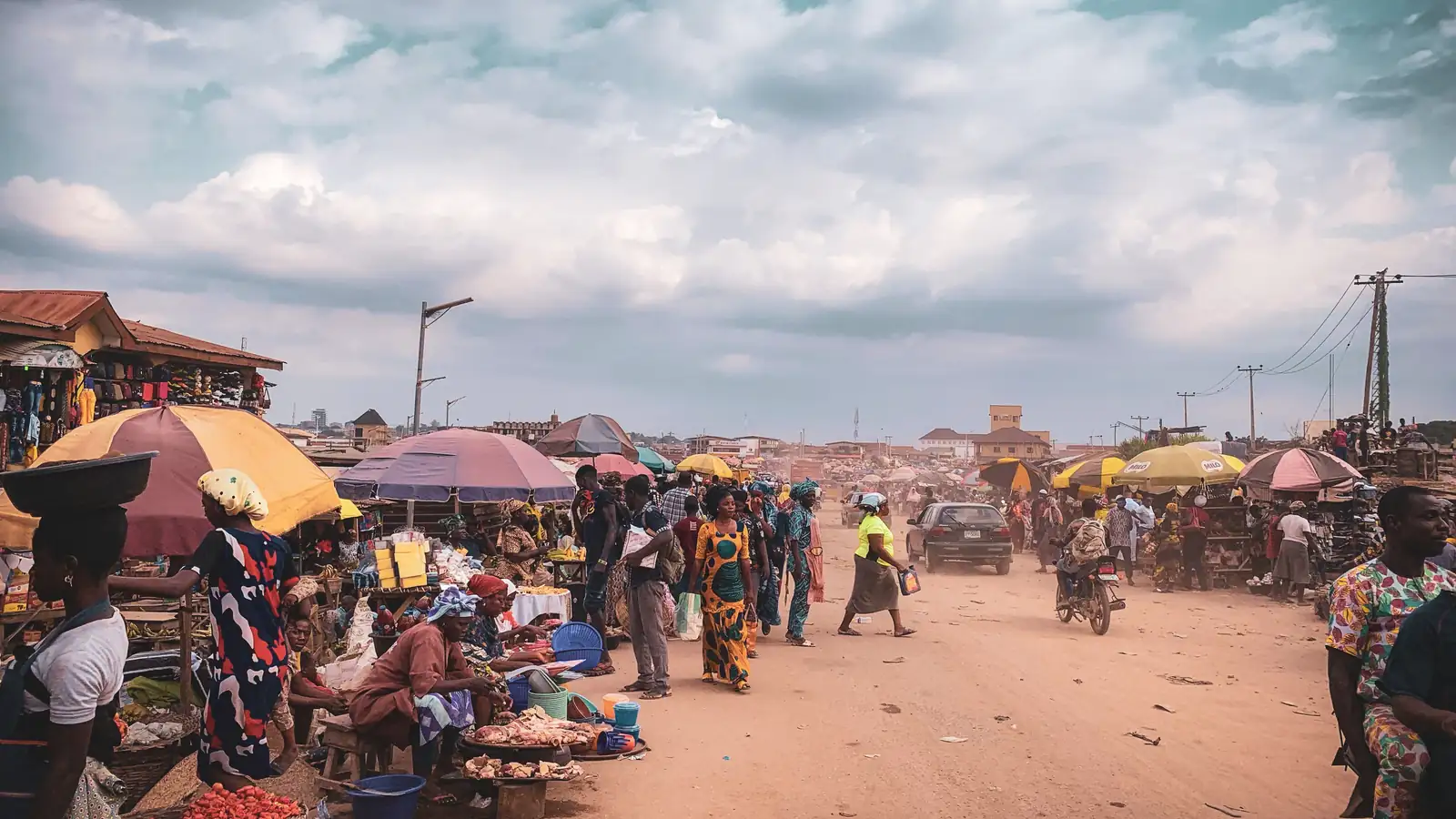
Kumasi is the capital of the Ashanti Region and Ghana’s commercial crossroads for the middle belt. Ashanti was the most populous region until Greater Accra overtook it narrowly in the 2021 census. The city runs on trade, and trade here runs on MoMo: traders at Kejetia, Adum and the Central Market take payments on their phones all day.
That makes Kumasi a natural P2P city. People are used to sending GH¢500 to someone they have never met for goods they have not yet seen. The same habit is what scammers exploit, as the Ponzi section shows.
The BTC Map project describes Accra and Kumasi as hosting a growing Bitcoin community. We could not get a merchant count from it, and we have not seen any reliable figure for how many shops in Kumasi take Bitcoin. Assume very few.
The Bitcoin Technology Centre in Ejisu
In December 2022, the Built With Bitcoin Foundation opened a Bitcoin Technology Centre in Ejisu, in Greater Kumasi, as a legacy project of the first Africa Bitcoin Conference held in Accra that month. The foundation was set up by Ray Youssef and Yusuf Nessary, with support from the Edwinase community and Blockchain Foundation Africa, the group Asare went on to found.
At launch it promised free classes in financial literacy, an introduction to Bitcoin, entrepreneurship, computers and coding, with a target of about 400 learners in the first year and monthly meetups. It was to be run by eight Ghanaian staff. Nasdaq’s report added that construction workers on the site were paid in bitcoin.
Ray Youssef is also a co-founder of Paxful, the P2P site many Ghanaians once used. Paxful shut down on 1 November 2025. If an older guide or a friend tells you to “buy on Paxful”, that route no longer exists.
Ways to buy crypto in Kumasi
For most Kumasi buyers, the realistic choice is between paying a P2P seller from MoMo and buying with a bank card. The MoMo route on a marketplace such as Bybit or Binance looks like this.
-
Verify your account
Sign up with your Ghana Card and a selfie. The KYC check (identity verification) usually needs good light and a stable data connection. -
Pick a seller, not a price
Sort by completion rate and number of trades, then compare the price. A rate far below the rest is a warning, not a bargain. -
Open the order and pay
The seller’s USDT moves into escrow. Send exactly the amount shown, from a MoMo wallet in your own name, and mark the order as paid. -
Wait for release
The seller confirms your cedis and the platform releases the coins. If nothing happens, use the platform’s appeal button, never a phone call.
Prices on P2P sit a little above the official rate. On the morning we checked in mid-November 2026, the best Bybit seller asked GH¢12.39 per USDT while the BoG interbank selling rate was GH¢11.79. Our guide to buying crypto with mobile money covers fees and network differences in more detail.
The card route is simpler if your bank allows it. CEX.IO, our #1 pick, accepts Visa and Mastercard from Ghana, charges 0.49% to 4.99% plus a service charge, and caps new accounts at $1,000 a day for the first three months. It has no cedi wallet, no MoMo and no P2P, and no Ghanaian licence. Some Ghanaian banks decline card payments to crypto platforms, so try a small amount first.
Traders, Kejetia and MoMo
Kejetia Market is widely described as the largest single market in West Africa, with somewhere between 8,000 and 11,000 stalls depending on the source. It has had two fires in recent years: a large one in March 2023 and a smaller one on 24 January 2025, when the fire service saved 23 of 25 shops.
Fires are one reason traders keep money on phones rather than in drawers. They are also why some think about holding part of their float in USDT, a dollar-pegged coin. After the cedi lost about 30% against the dollar in 2022 and close to 28% in 2023, the logic is easy to follow. It has weakened again in 2026, by around 10.6% to mid-November.
Before a trader moves serious money through MoMo for crypto, the wallet tier decides what is possible.
| MoMo KYC tier | Daily limit | Maximum balance |
|---|---|---|
| Minimum | GH¢3,000 | GH¢5,000 |
| Medium | GH¢15,000 | GH¢40,000 |
| Enhanced | GH¢25,000 | GH¢75,000 |
These limits have applied since 1 March 2024. A trader selling GH¢20,000 of USDT in one go needs at least an enhanced wallet or a bank account to receive it. Splitting a big sale across several buyers is common, but each split is another counterparty to check.
Students and KNUST
KNUST admitted 50,895 students for the 2024/25 academic year, according to GNA, and Kumasi Technical University adds thousands more. Students are curious about crypto and short of money, which makes them both early adopters and easy targets.
In May 2024, Tether and Blockchain Foundation Africa announced a campus tour to teach students about stablecoins, naming KNUST and Kumasi Technical University among the planned stops. The announcement did not give dates for each campus, and we did not find a report confirming when the Kumasi sessions took place.
If you are a student, three habits cover most of the risk. Keep your seed phrase (the 12 or 24 words that control a wallet) on paper, never in a WhatsApp chat. Turn on app-based 2FA, not SMS codes, because SIM swaps happen. And treat any classmate who offers to “trade for you” as a red flag, however friendly.
Ponzi history to remember
On 2 September 2024, Ashanti Regional Police arrested 487 people (257 women and 230 men) at a house in Adwuman, near Kenyasi, a Kumasi suburb, in connection with the QNET scheme. Police said recruits had been drawn from across the country with promises of lucrative returns. Twelve people described as executives were held.
QNET was not a crypto scheme, but the playbook is identical to the crypto Ponzis that followed. You are told to invest, then to recruit, and your “profit” is paid from the next person’s deposit. The SEC’s standing advice applies: guaranteed returns and earnings tied to recruitment are red flags.
Ghana’s wider record repeats the lesson. Menzgold’s founder is on trial in Accra over losses the prosecution puts at about GH¢1.68 billion from roughly 16,000 customers, many outside the capital. Global Coin Community Help collected about GH¢47.2 million from more than 3,000 depositors, and the BoG said it had never licensed the firm. Our crypto scams guide lists the current warnings.
Cashing out in Kumasi
To turn crypto into cedis, you reverse the buying steps. Open a sell order for USDT on a P2P marketplace, let the buyer send cedis to your MoMo wallet or bank account, and release only when the money shows in your balance. An SMS saying “payment received” is not proof; the reversal scam starts with exactly that.
Once the cedis are in your wallet, you can withdraw at any MoMo agent in town or move them to your bank. Check the fee on your confirmation screen, because published fee tables are not always current.
Keep a simple record of what you bought, when and at what price. The GRA has said existing tax law covers crypto gains, even though it has not published crypto-specific rules.
Frequently asked questions
Where can I buy crypto in Kumasi?
Is there a crypto exchange office in Kumasi?
How do I cash out crypto in Kumasi?
Are face-to-face crypto trades safe in Kumasi?
Is the Ejisu Bitcoin centre still running classes?
Can a Kejetia trader use USDT for import payments?
Sources we checked
- ↗Cointelegraph — Coinfest Africa gathers crypto activists in Ghana (Kumasi, March 2015)
- ↗Bitcoin Magazine — Built With Bitcoin opens Bitcoin technology centre in Ejisu
- ↗Nasdaq — Built With Bitcoin opens technology centre in Ejisu, Ghana
- ↗GNA — Police arrest 487 QNET Ponzi scheme operators
- ↗GNA — KNUST welcomes 50,895 new students for 2024/2025
- ↗3News — Tether and Blockchain Foundation Africa to tour Ghana university campuses
- ↗MyJoyOnline — Swift GNFS response saves 23 shops in Kejetia Market fire
- ↗Wikipedia — Kejetia Market
- ↗Citi Newsroom — BoG increases mobile money transaction limits
- ↗GNA — BoG cracks down on crypto-linked USD wallet services
- ↗BTC Map — Ghana
- ↗CEX.IO — Limits and commissions
Risk note: crypto prices can fall sharply and you can lose all the money you put in. This page is general information, not financial, legal or tax advice. Fees, limits and rules change; check them with the provider, the Bank of Ghana and the SEC before you act.